Do Not Accept All
Narrative Roguelike Game & Interactive Art Installation
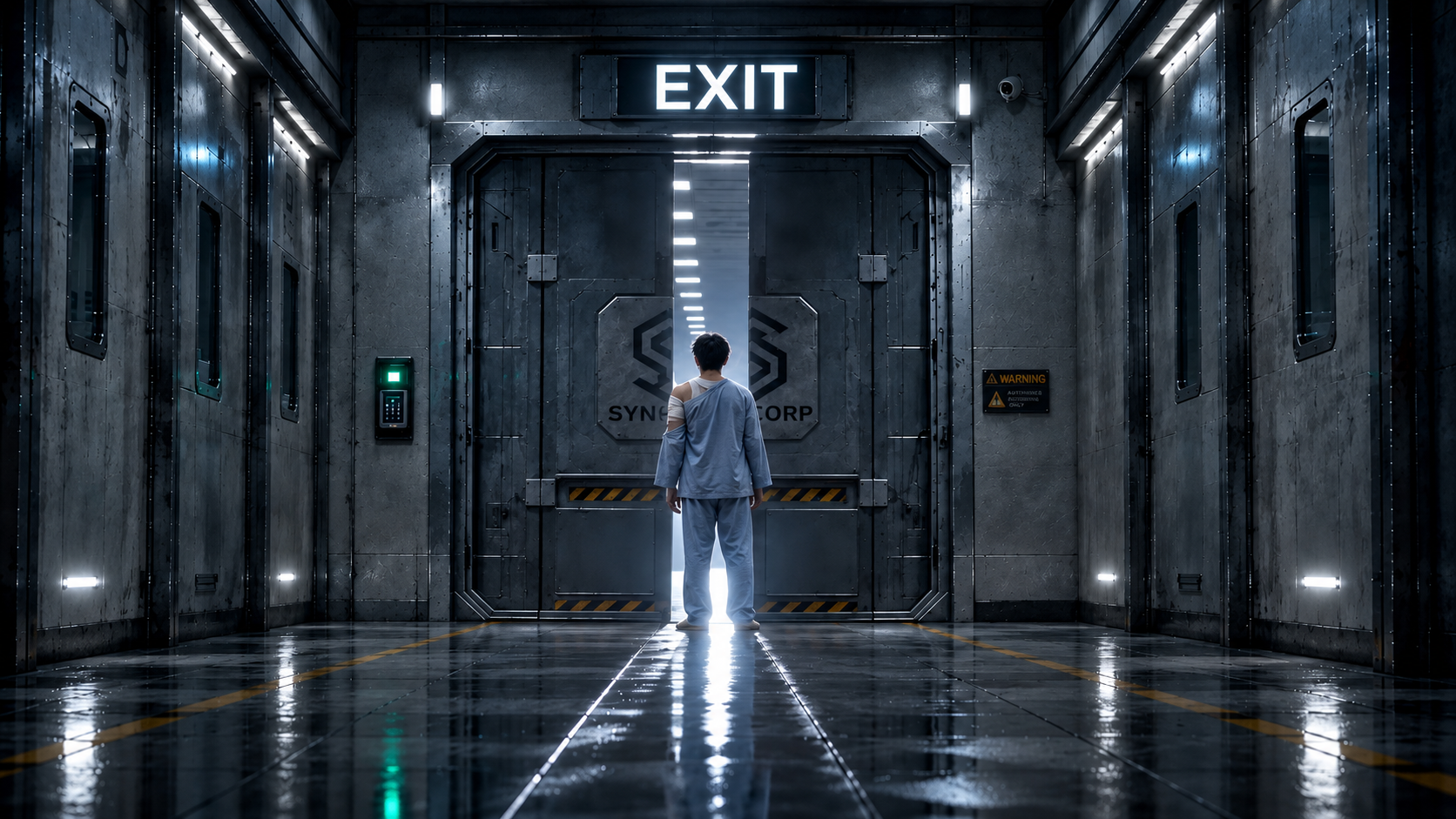
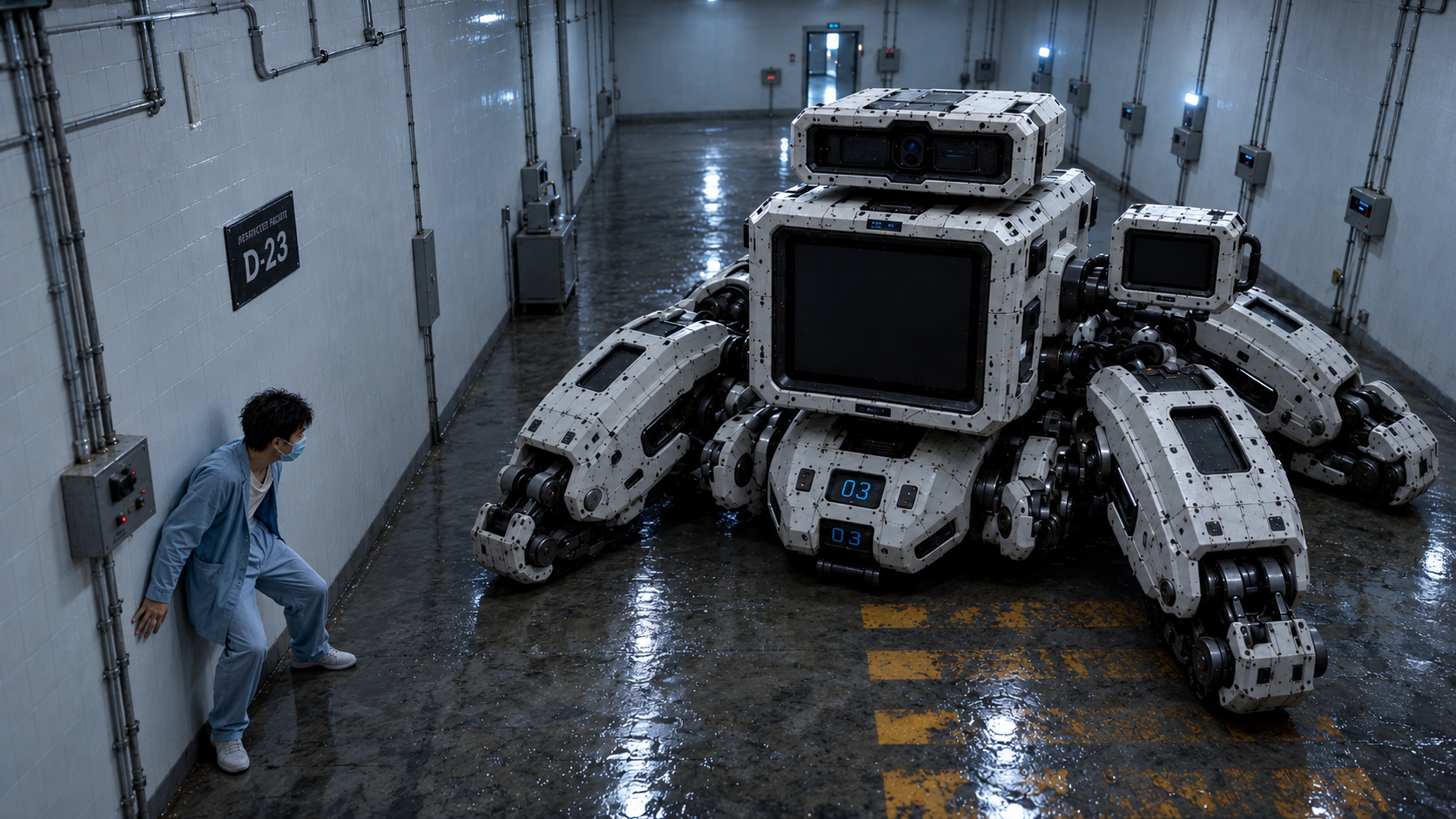
Cinematic sequences




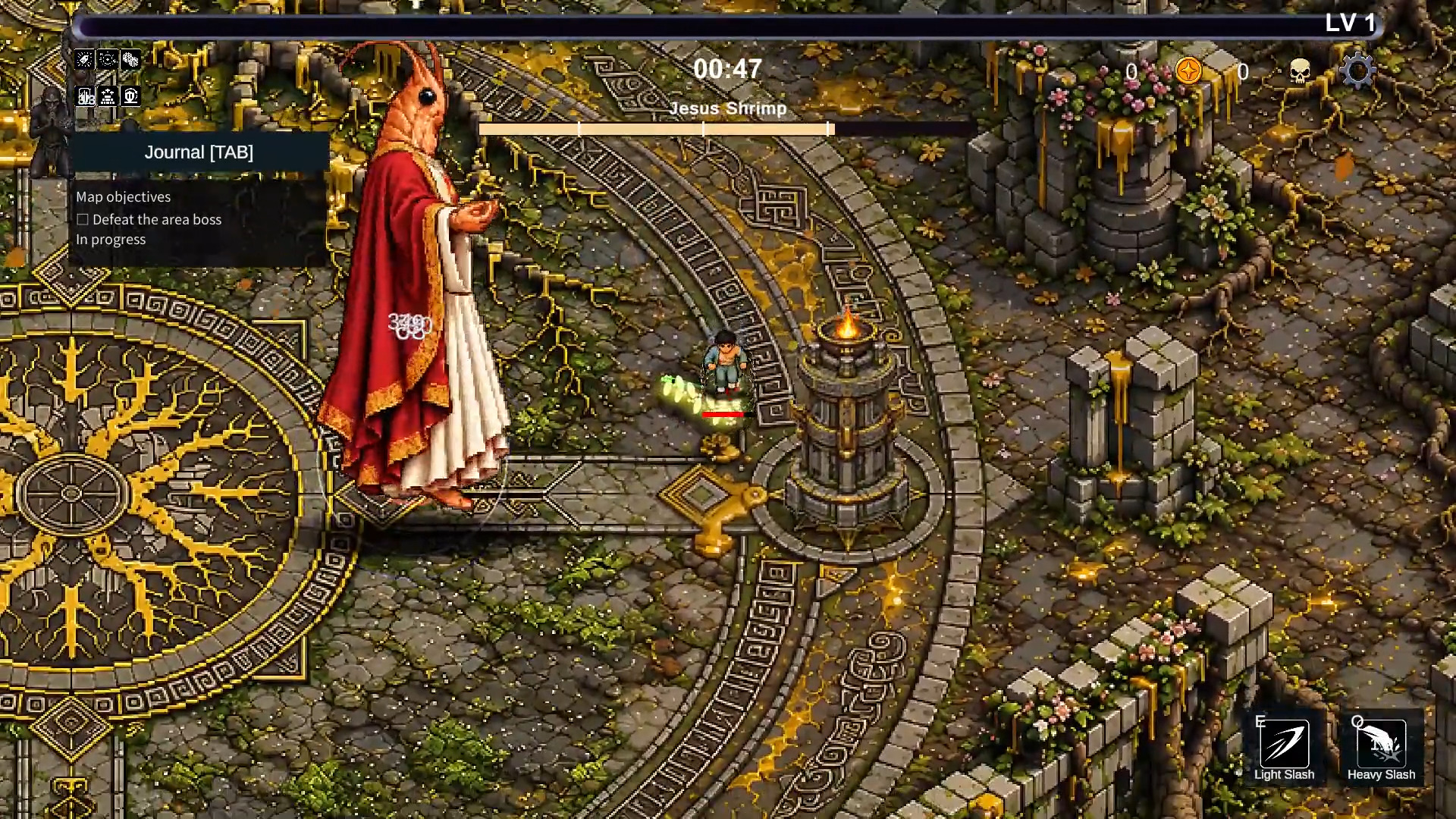
Gameplay
About the game
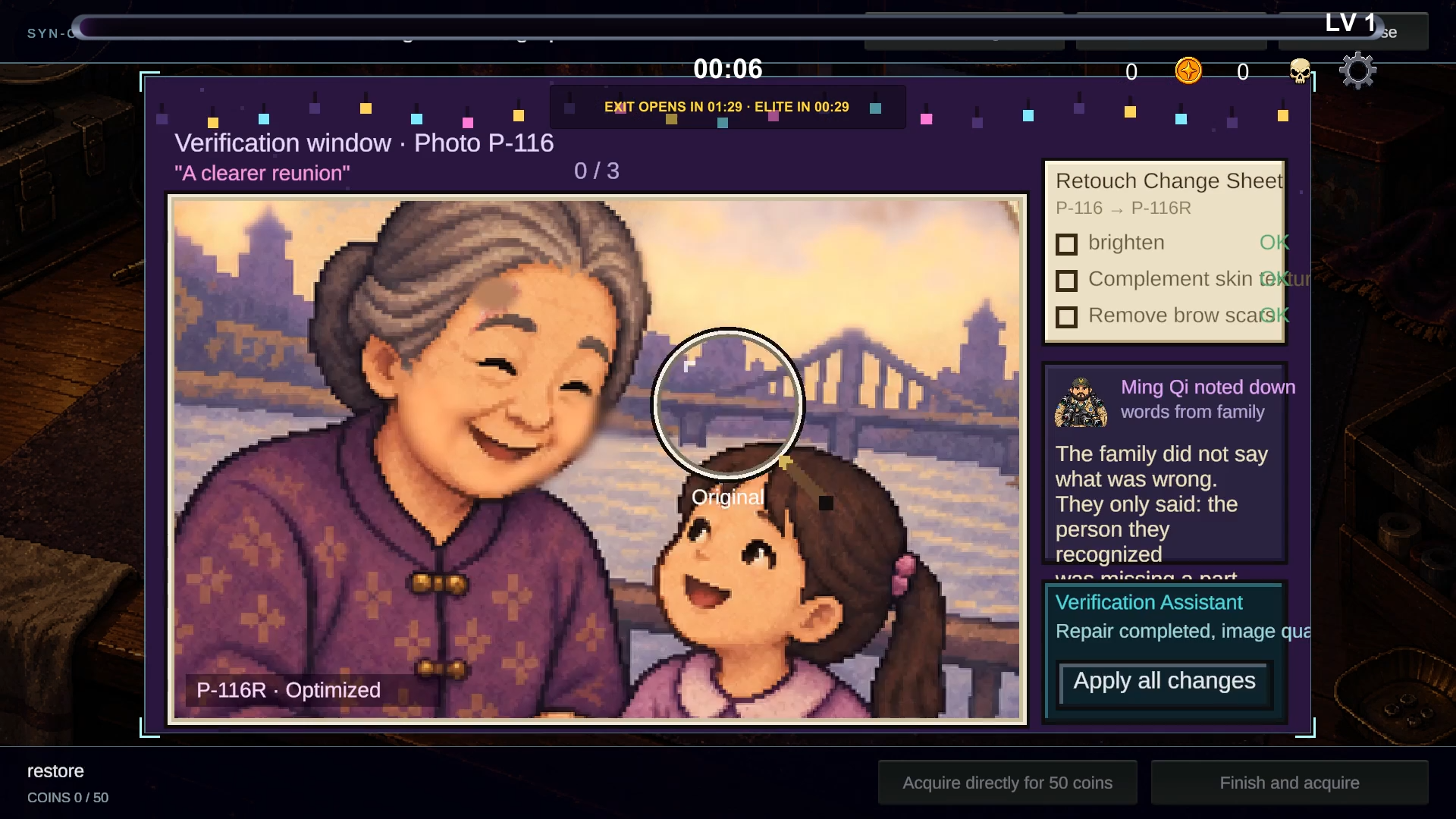
Do Not Accept All is a narrative-driven roguelike video game exploring artificial intelligence, internet culture, corporate power, human identity, and the ecological costs of technological development. Structured across five interconnected chapters, the game has an estimated playtime of 70–90 minutes and is available in Chinese, Korean, Japanese, English, German, Spanish, and French.
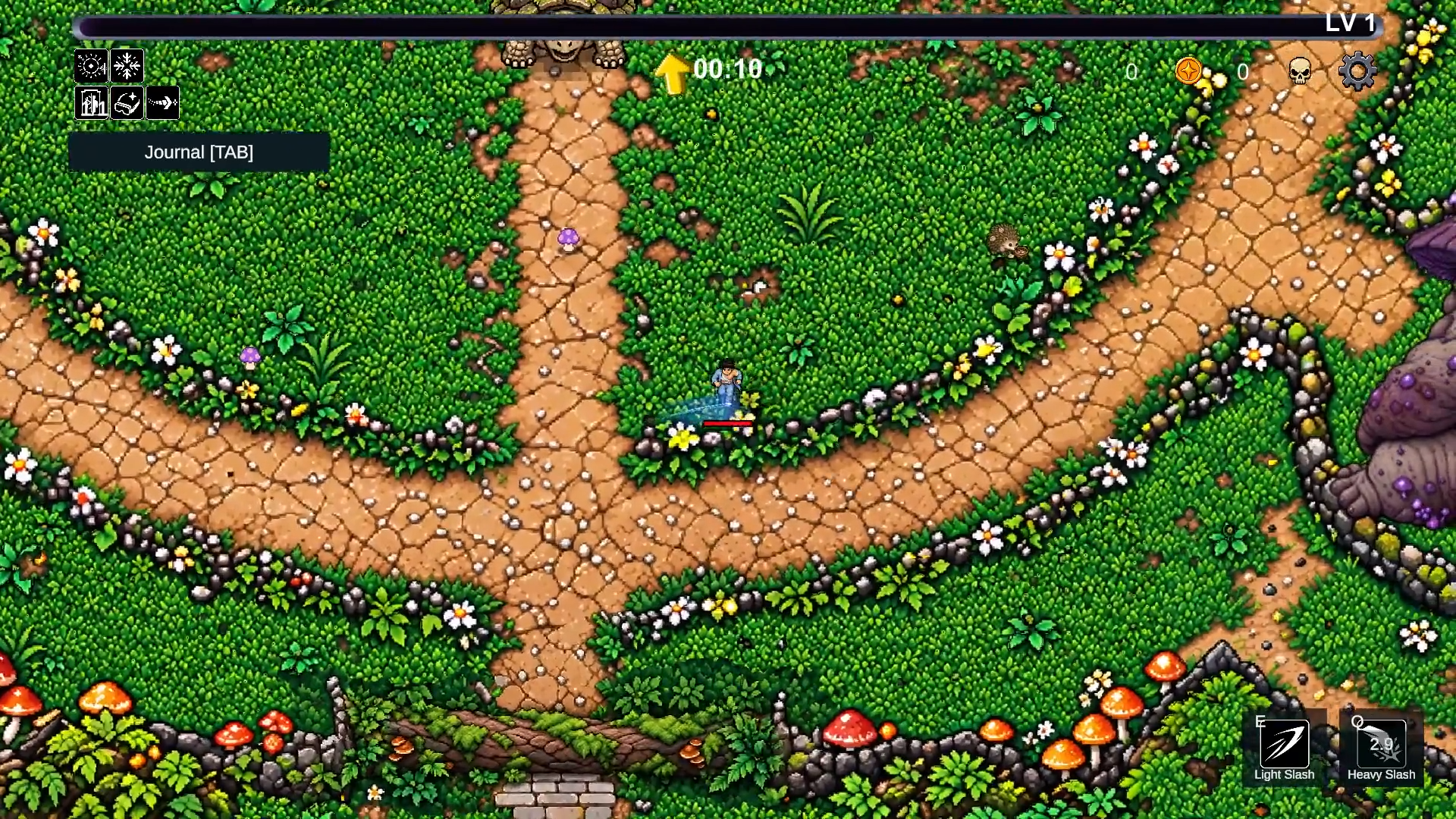
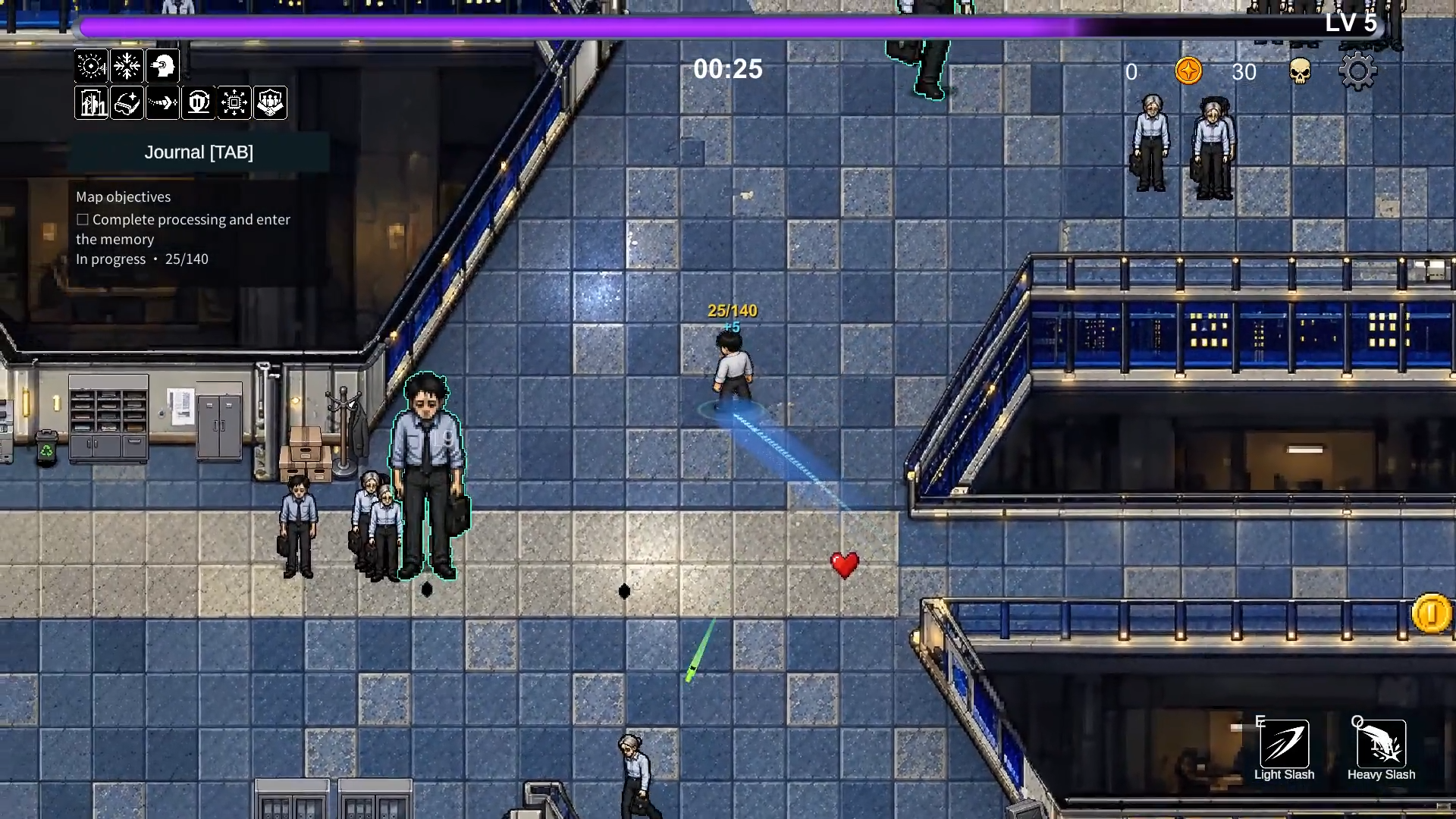
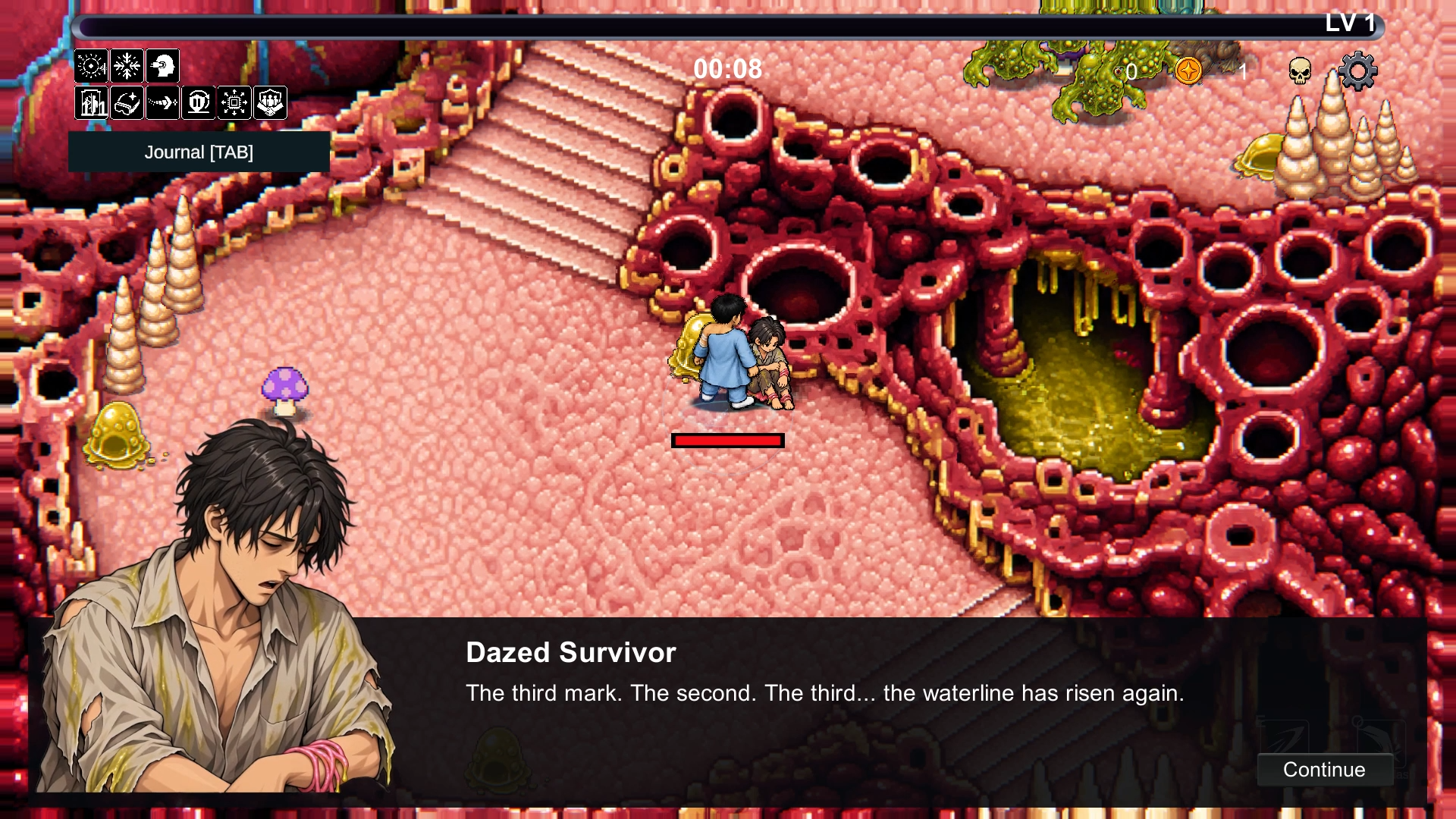
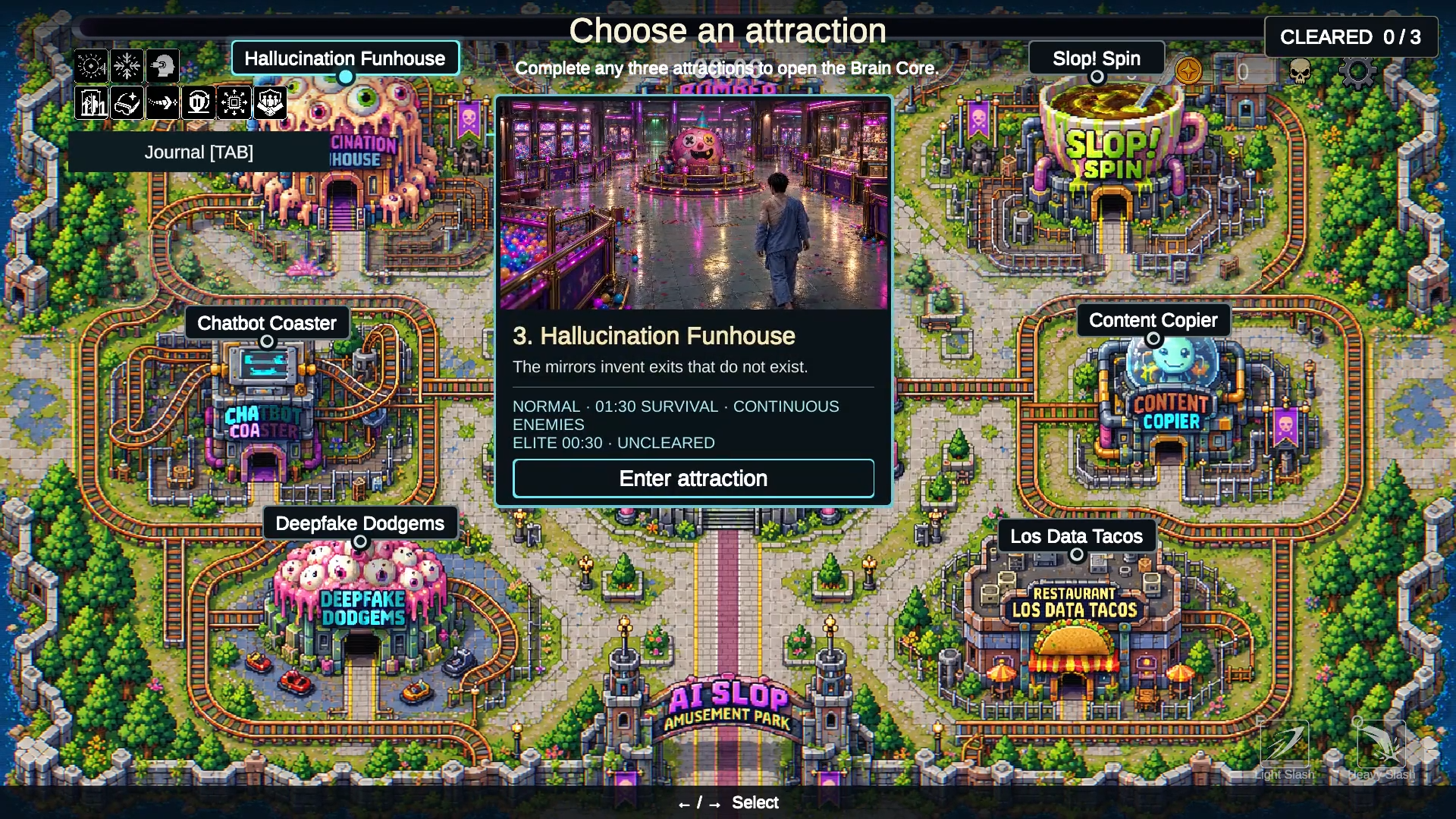
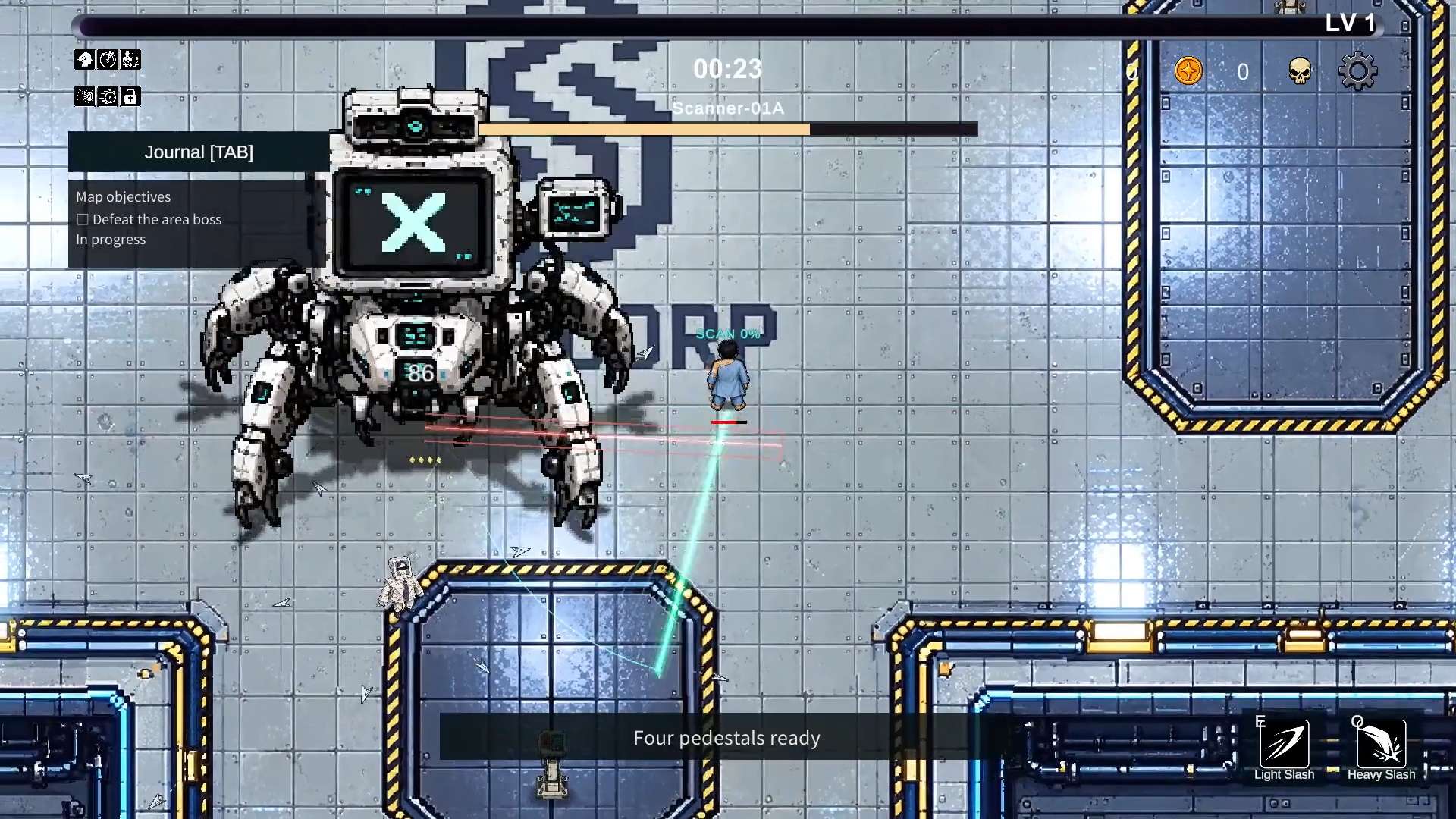
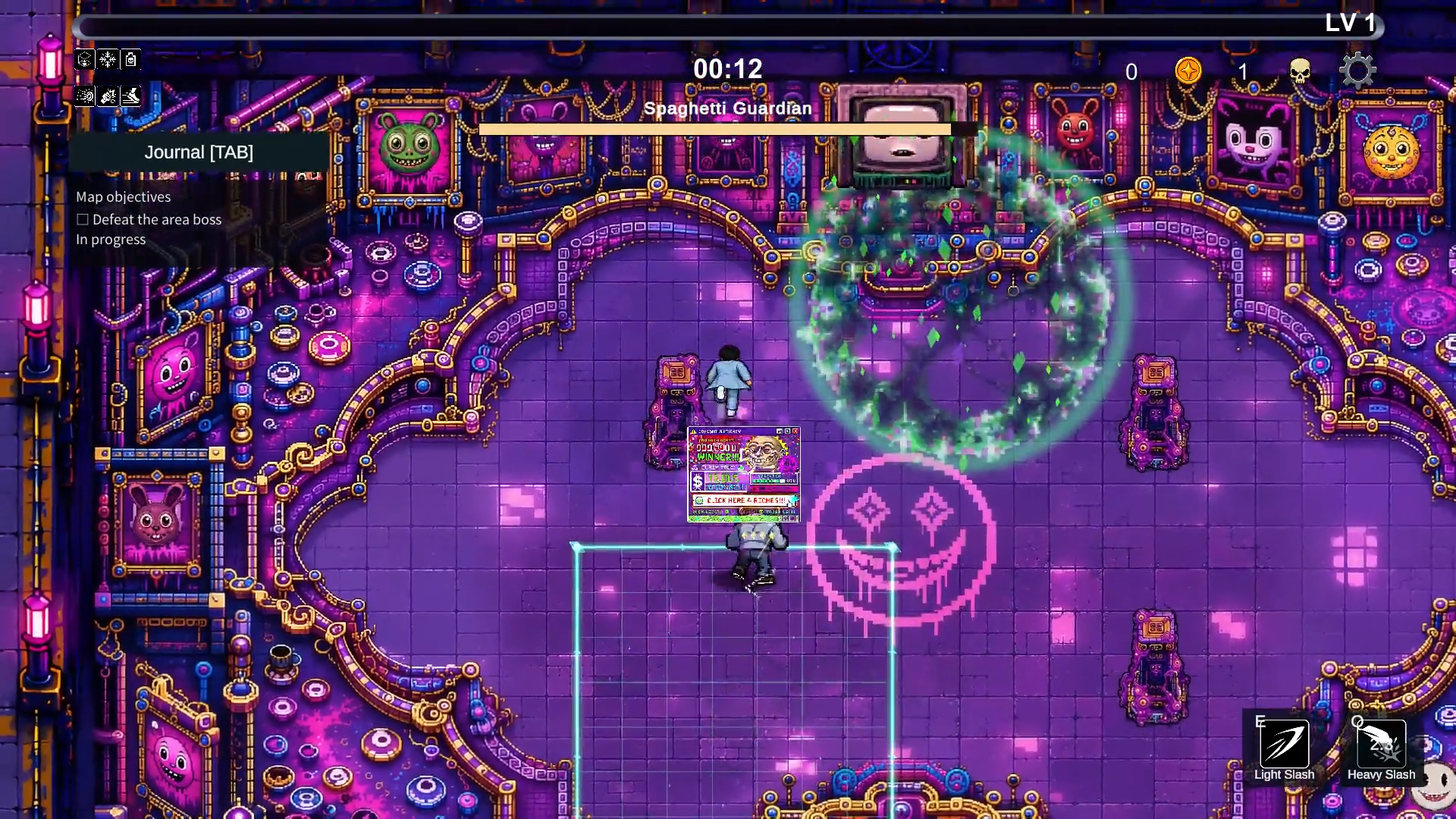
The story follows Chen Mo, an employee of the technology corporation SYN-CORP. After discovering that the company uses artificial intelligence not only to optimize information and automate labour, but also to manipulate memories, identities, and personal choices, he attempts to escape its control. Through top-down combat, exploration, character progression, side quests, and cinematic sequences, players move between underground laboratories, AI-generated entertainment worlds, artificial paradises, and corporate memory systems. These environments ask where individual agency might remain when human experience can be generated, edited, and replaced.
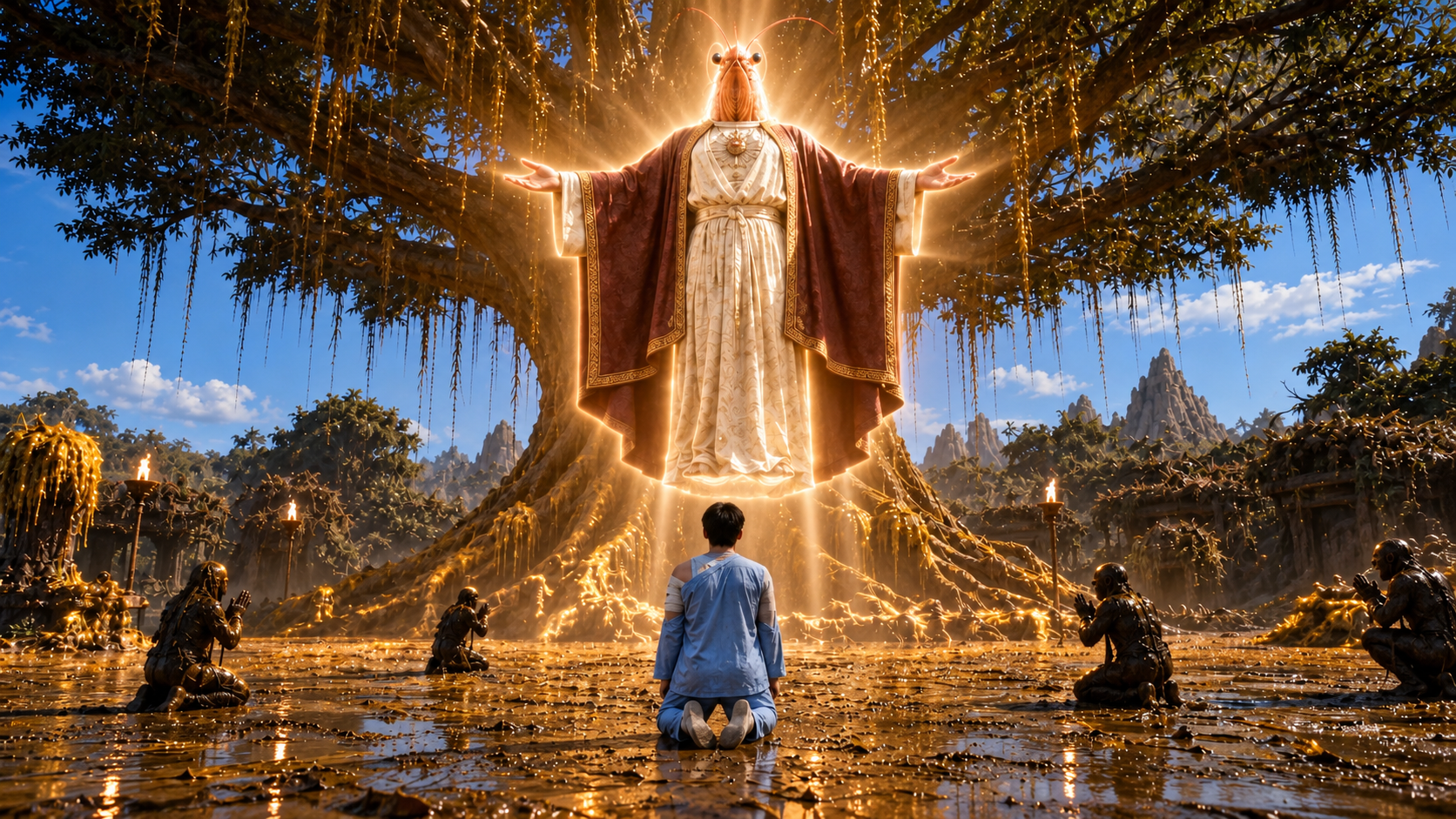
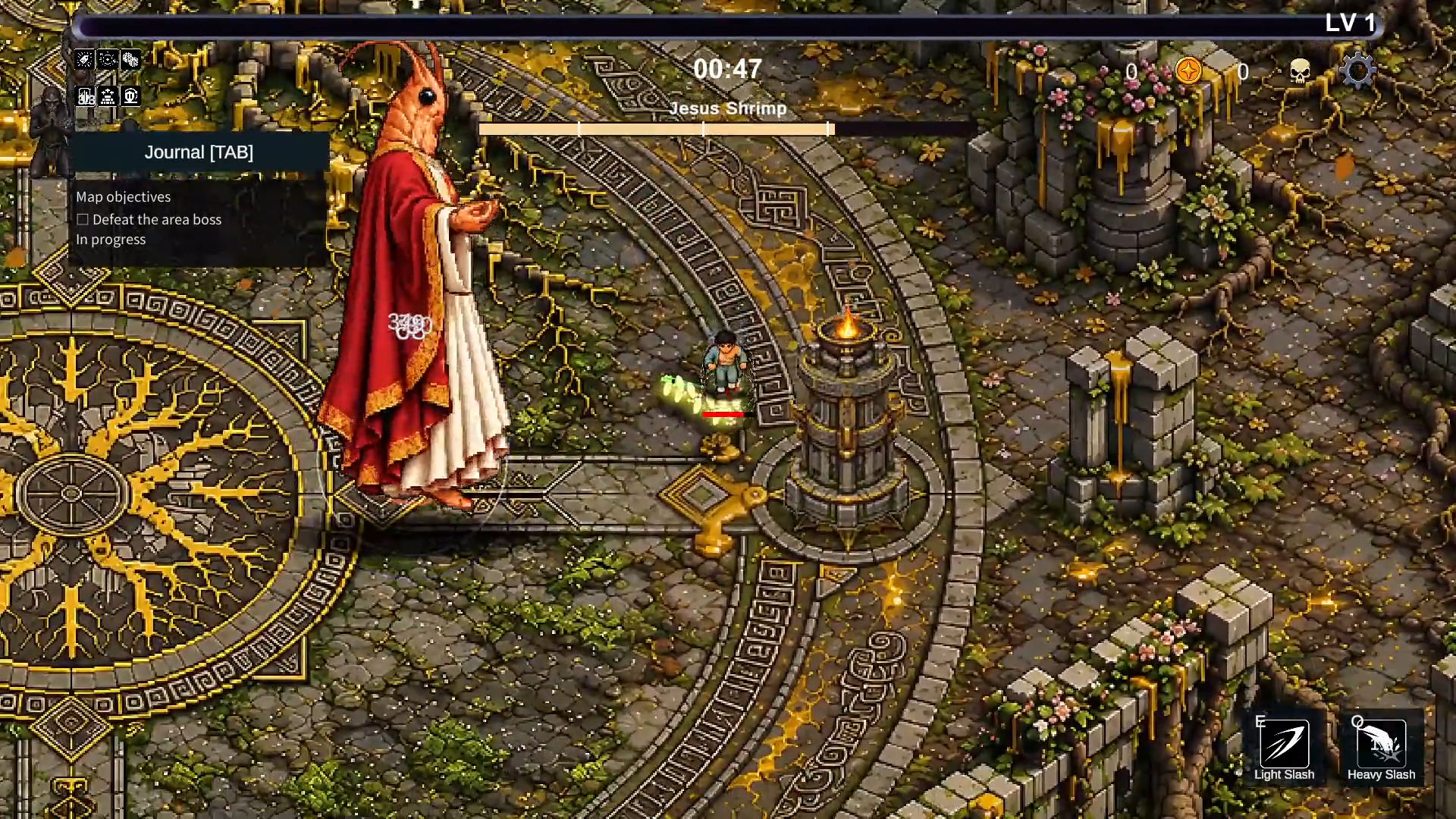
Jesus Shrimp is a central figure through which the work examines internet culture and technological power. Bringing together religious iconography, internet memes, and AI-generated imagery, the figure appears both as a digital saint and as an artificial being produced through the repetition and mutation of online content. Its absurdity extends beyond visual humour. It points towards a condition in which images can circulate independently of lived experience or verifiable reality, acquiring attention, authority, and even belief through repetition and algorithmic amplification.
Within the work, Jesus Shrimp embodies the Dead Internet Theory. It gives form to the unsettling possibility of an internet increasingly constituted by automated production and automated response: synthetic images, generated voices, and machine commentary circulating through systems that continually reproduce one another. Human expression becomes diluted, displaced, or overwhelmed within this expanding flow of content. Jesus Shrimp therefore represents both a peculiar product of internet culture and a symbol of AI eroding the internet as a shared human space—an image of the internet’s potential destruction through the very technologies that promise to extend it.
The game connects this erosion of digital culture to the material consequences of technological expansion. Particularly in its third chapter, characters, creatures, and side stories expose conflicts between technological infrastructure, industrial resource consumption, and the natural environment. Through exploration and interaction, players encounter how efficiency, optimization, and continuous growth can disrupt ecological systems and affect lives that cannot be measured through corporate metrics. What is at stake is not only human memory and identity, but also the living world beyond humanity.
Related installation
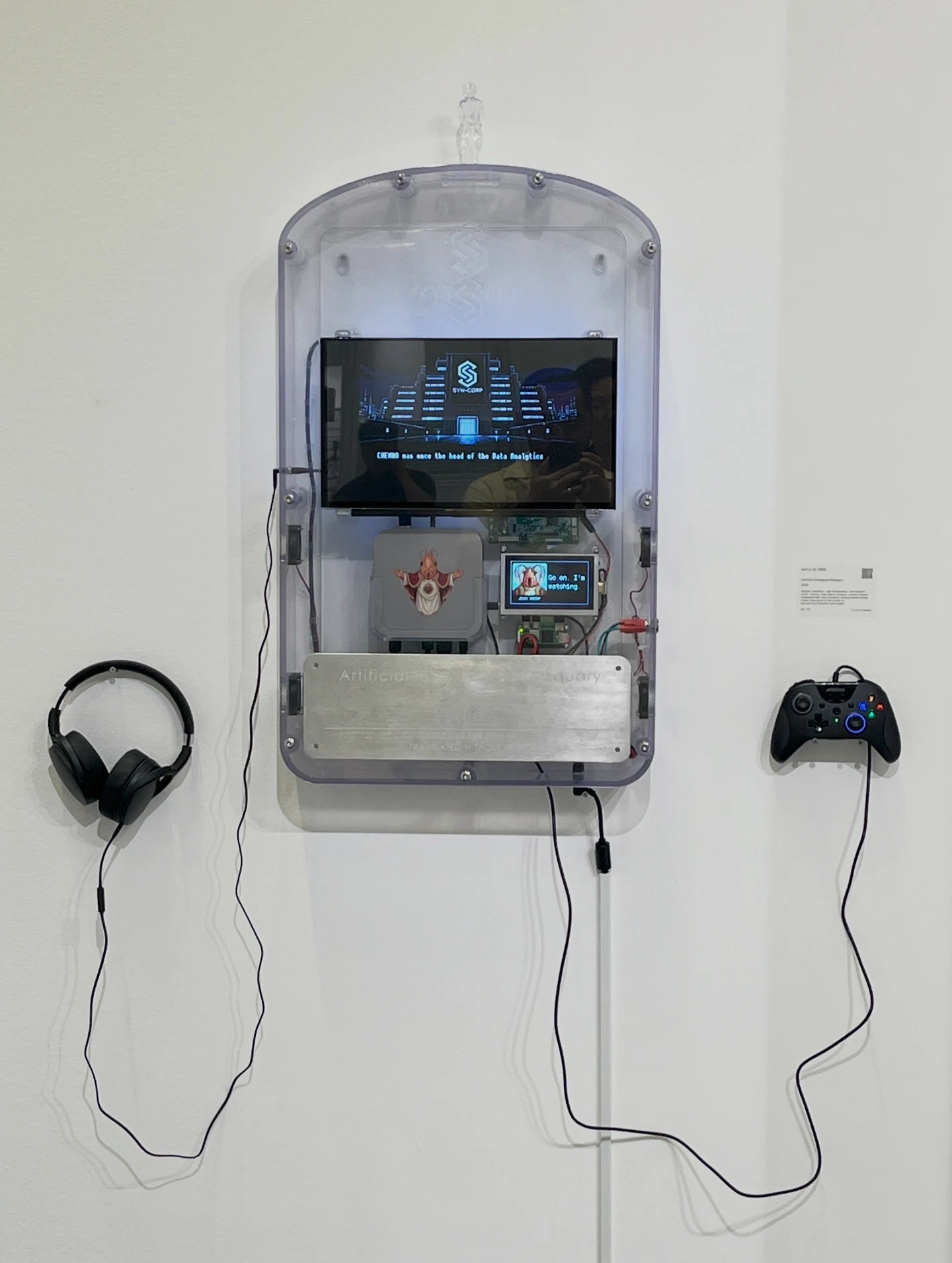
Artificial Intelligence Reliquary
The game is also presented through the physical installation Artificial Intelligence Reliquary. Combining the forms of a reliquary, a gravestone, and a technological black box, the installation houses a playable digital world within a structure incorporating screens, a computer, a controller, and sculptural elements. Here, Jesus Shrimp operates as an AI commentator, using generated speech to respond to the unfolding gameplay and the player’s actions in real time. It is both an image being observed and an artificial observer interpreting human behaviour, reversing the relationship between the spectator and the machine.
Where a traditional reliquary preserves a sacred object, this installation preserves a technologically constructed world, while its human visitor becomes an object of observation. Bringing games, religious imagery, and internet culture into the same field of inquiry, Do Not Accept All asks: when reality, belief, and identity can all be generated and optimized, what are we accepting—and what remains possible to refuse?